
Perfume Notes Explained: Top, Heart and Base Notes (With Examples)
What do "top notes" and "base notes" actually mean, and why does a perfume smell different after an hour? A plain guide to the fragrance pyramid, scent families and common notes, with Urdu names.
 KScentsPerfume house by Khurshid
Updated
In this article7 sections
Every perfume page lists notes: bergamot, pink pepper, jasmine, oakmoss, ambergris. To someone who just wants to smell nice, it can read like a foreign menu. What does “black pepper” mean in a perfume? Does it smell like the kitchen? And why are the notes split into three groups?
Understanding notes is the single most useful thing you can learn about perfume, especially if you buy online. Once you can read a perfume’s notes, you can guess roughly how it smells and how it will change over a day, before you ever spray it.
The short answer
- Top notes are the first impression and fade within about 15 minutes.
- Heart notes are the main character and last a few hours.
- Base notes are the foundation and can last for many hours.
- Never judge a perfume on the first spray. Wait 20 to 30 minutes.
What are perfume notes?
A note is a smell you can pick out in a perfume, like rose, lemon or sandalwood. The word comes from music. A perfumer combines notes the way a musician combines notes into a chord, and a blend of notes that works as one smell is even called an accord.
Notes don’t always mean an ingredient was taken directly from that thing. “Sea salt” isn’t salt from the beach, and “black cherry” isn’t cherry juice. Notes describe what you smell, and perfumers build them from many different materials, natural and modern. Think of them as a description, not a recipe.
The fragrance pyramid
Perfume notes are usually shown as a pyramid with three levels. They’re arranged by how quickly they evaporate, which is why a perfume changes as it sits on your skin.
Top notes: the first impression
Top notes are the light, bright molecules that reach your nose first and evaporate fastest. They usually last from a few minutes to about a quarter of an hour. Citrus, bergamot, light fruits, fresh herbs and sparkling spices like pink pepper are typical top notes.
In Ocean Valley, the sea salt, bergamot and black pepper are top notes. They give that crisp, breezy first spray.
Heart notes: the main character
Also called middle notes, these appear as the top notes fade and form the core of the perfume for the next few hours. Florals live here, along with many spices and some fruits. This is what the perfume “is” for most of the time you wear it.
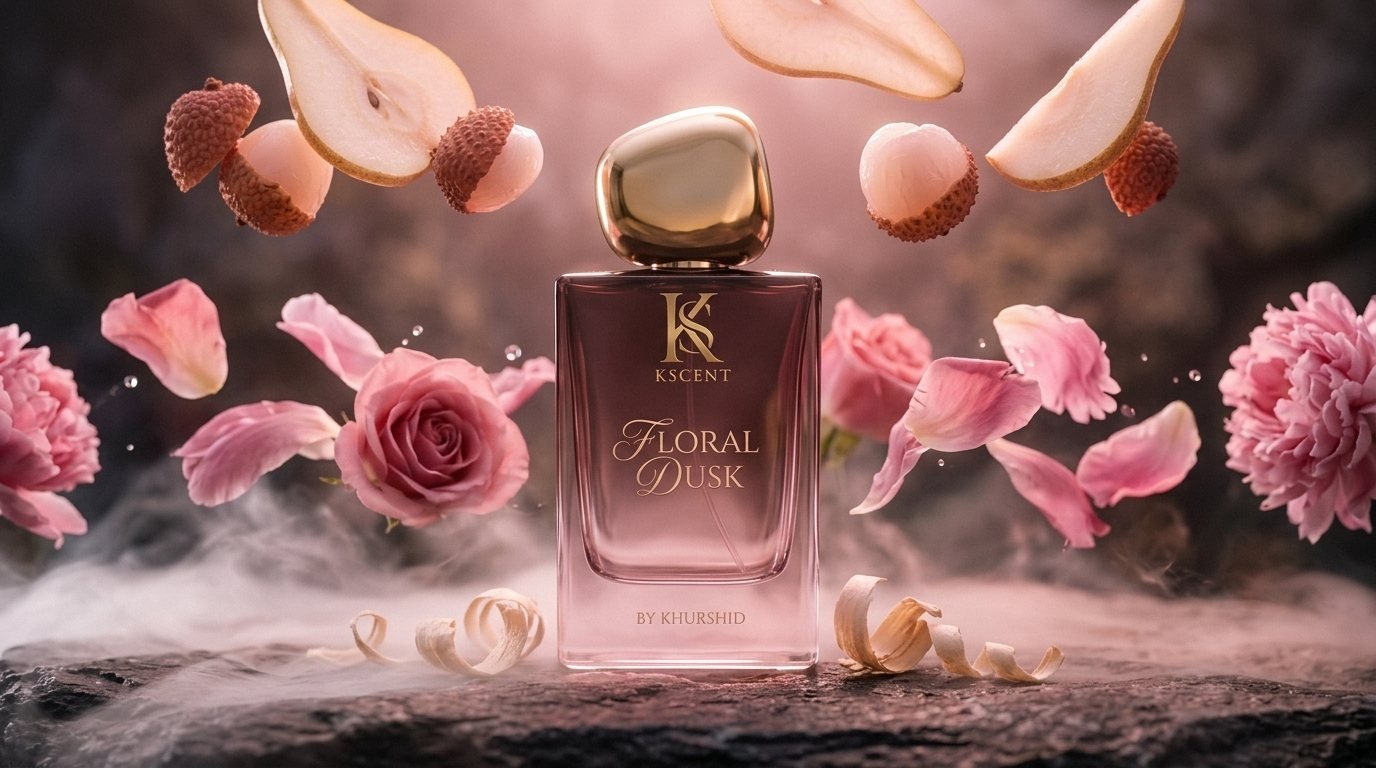
In Floral Dusk, rose petals, magnolia and orange blossom make up the heart. Once the juicy pear and lychee opening settles, that bouquet is what you smell for much of the day.
Base notes: the foundation
Base notes are the heavy, slow molecules that last the longest, often for many hours and sometimes into the next day on clothes. Woods, musk, amber, vanilla, oud, vetiver and patchouli are classic base notes. They anchor the lighter notes and decide how a perfume smells at the end of the day.
In Majestic Oud, the amber, sandalwood, leather and musk are the base. They are why it’s one of our longest-lasting perfumes.
| Stage | When you notice it | Common notes |
|---|---|---|
| Top notes | First 5 to 15 minutes | Bergamot, lemon, mandarin, pear, pink pepper, sea salt |
| Heart notes | From about 15 minutes, for a few hours | Rose, jasmine, peony, lavender, cinnamon, orange blossom |
| Base notes | Hours, and on clothes much longer | Oud, amber, sandalwood, vanilla, musk, vetiver, patchouli |
Why the first spray isn’t the real perfume
Because top notes are so fleeting, the first few seconds after spraying tell you very little about how a perfume will smell for most of the day. Many perfumes that seem sharp or loud at first settle into something soft and beautiful. Others that open with a delicious fruit fade into something you don’t like at all.
So spray it on your skin, walk away, and smell it again after 20 or 30 minutes. If you can, wear it for a whole day before deciding. Our guide on how to choose a perfume has more tips on testing properly.
The main fragrance families
Perfumes are also grouped into families, based on their main character. Knowing which family you like is a shortcut to finding new scents you’ll enjoy.
| Family | What it smells like | Example |
|---|---|---|
| Fresh | Citrus, sea, green leaves and herbs. Clean and light. | Ocean Valley |
| Floral | Rose, jasmine, peony and other flowers. | Floral Dusk |
| Amber (often called oriental) | Warm resins and spice, often sweet. | Signature Scent |
| Woody | Sandalwood, cedar, vetiver, oud. | Majestic Oud |
| Gourmand | Edible sweet notes: vanilla, praline, caramel. | Signature Scent leans this way |
| Fruity | Pineapple, apple, cherry, berries. | Venture Noir |
| Chypre and mossy | Bergamot over oakmoss and patchouli. Elegant, a little earthy. | Venture Noir’s base |
Common notes and their Urdu names
Many perfume notes are things we already know from our kitchens, gardens and bazaars. Here are some you’ll see often:
| Note | In Urdu | What it smells like |
|---|---|---|
| Rose | Gulab | Sweet, velvety, classic floral |
| Jasmine | Chambeli / Motia | Rich, heady white flowers |
| Sandalwood | Sandal / Chandan | Creamy, smooth, milky wood |
| Saffron | Zafran | Warm, slightly leathery and honeyed |
| Cardamom | Elaichi | Fresh, cool spice |
| Cinnamon | Darchini | Warm, sweet spice |
| Vetiver | Khus | Earthy, green, a little smoky root |
| Oud | Oud / Agar | Smoky, resinous, deep wood |
| Amber | Anbar | Warm, resinous, gently sweet |
| Musk | Mushk | Soft, clean, skin-like warmth |
| Orange blossom | Narangi ke phool | Bright, honeyed white flower |
A few notes that confuse people
- Amber in perfume isn’t the fossil resin used in jewellery. It’s a warm blend, usually of resins and vanilla.
- Ambergris was once a rare natural material. Today it’s almost always recreated with modern ingredients, and it adds a salty, warm, skin-like glow.
- Modern musks are clean and soft, closer to freshly washed skin than to anything animal.
- Oakmoss is a lichen. It smells earthy and inky, like a forest floor, and gives a perfume depth.
- A marine or aquatic accord is the impression of sea air. Nothing is actually taken from the sea.
- Tonka bean sits somewhere between vanilla, almond and fresh hay.
How to use notes to choose your next perfume
Look back at the perfumes you’ve loved. Do they share a family? Do the same notes keep turning up, such as rose, oud or vanilla? Those are your clues. When you’re reading about a perfume online, pay most attention to the heart and base notes, because that’s what you’ll smell for most of the day.
And remember that skin plays a part. The same notes can smell slightly different on two people. That isn’t a fault, and it’s part of what makes a perfume feel like yours. Every KScents perfume page lists its full top, heart and base notes, so you always know what you’re choosing. Browse them all in our floral, fresh and woody collections.


